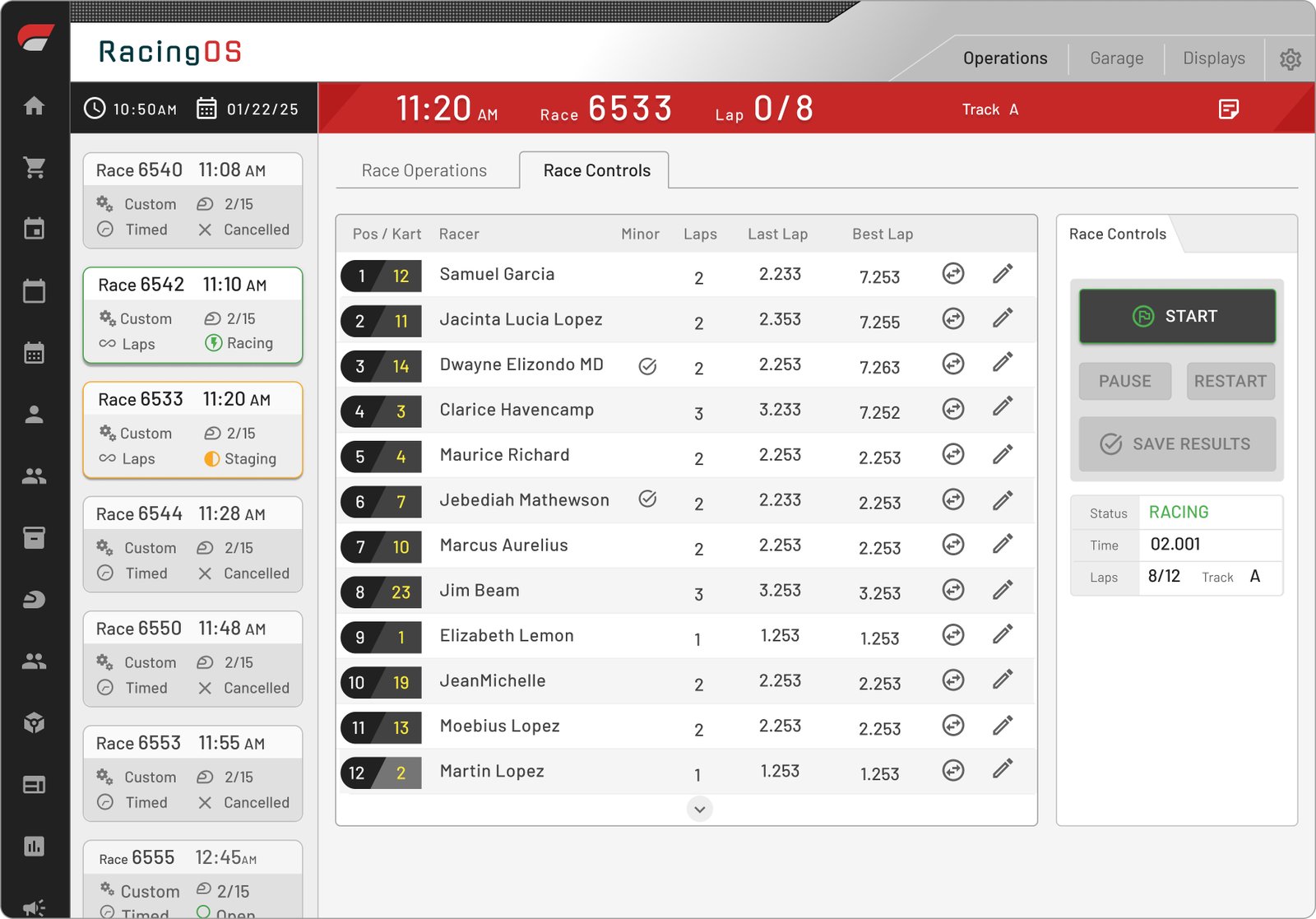
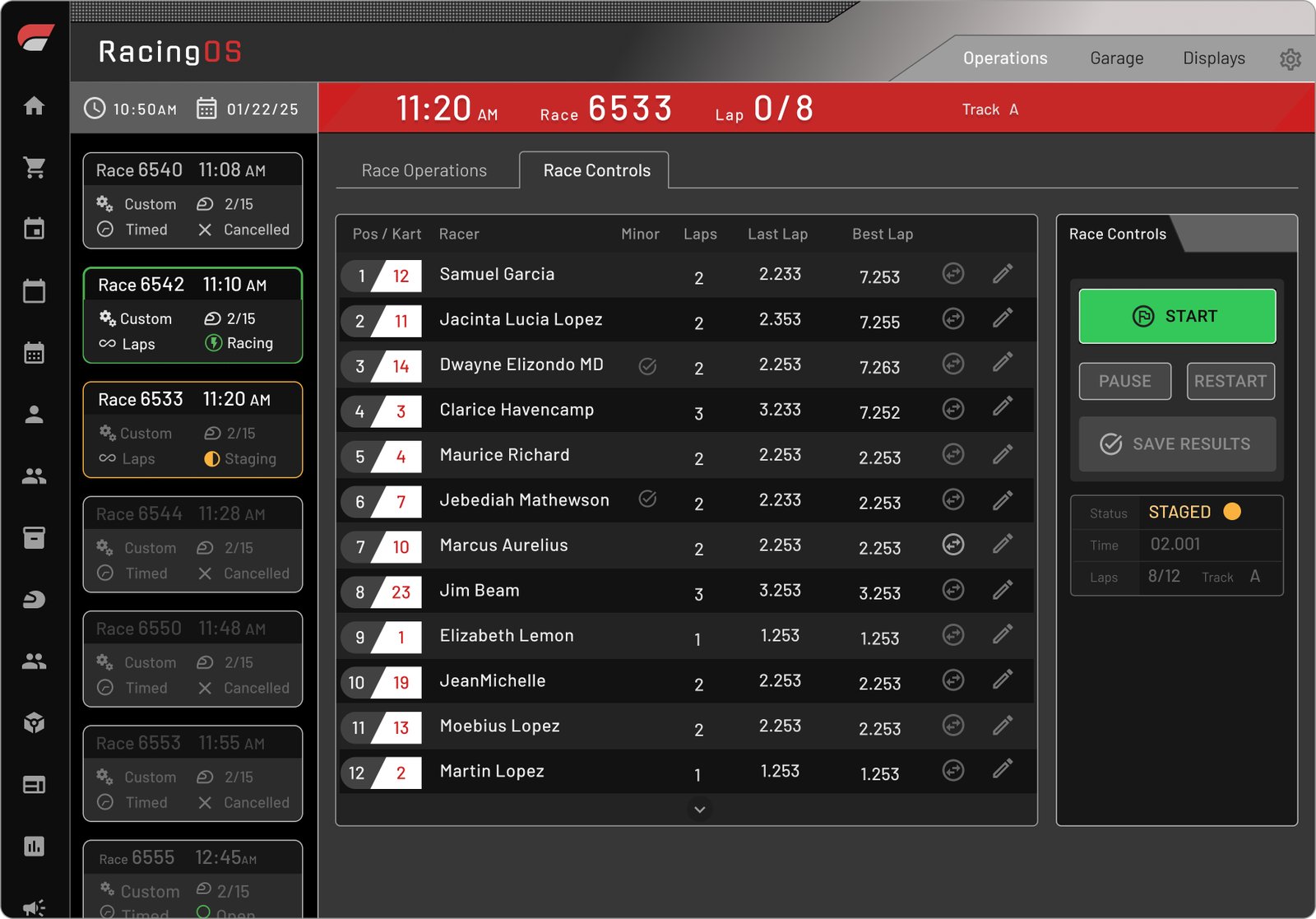
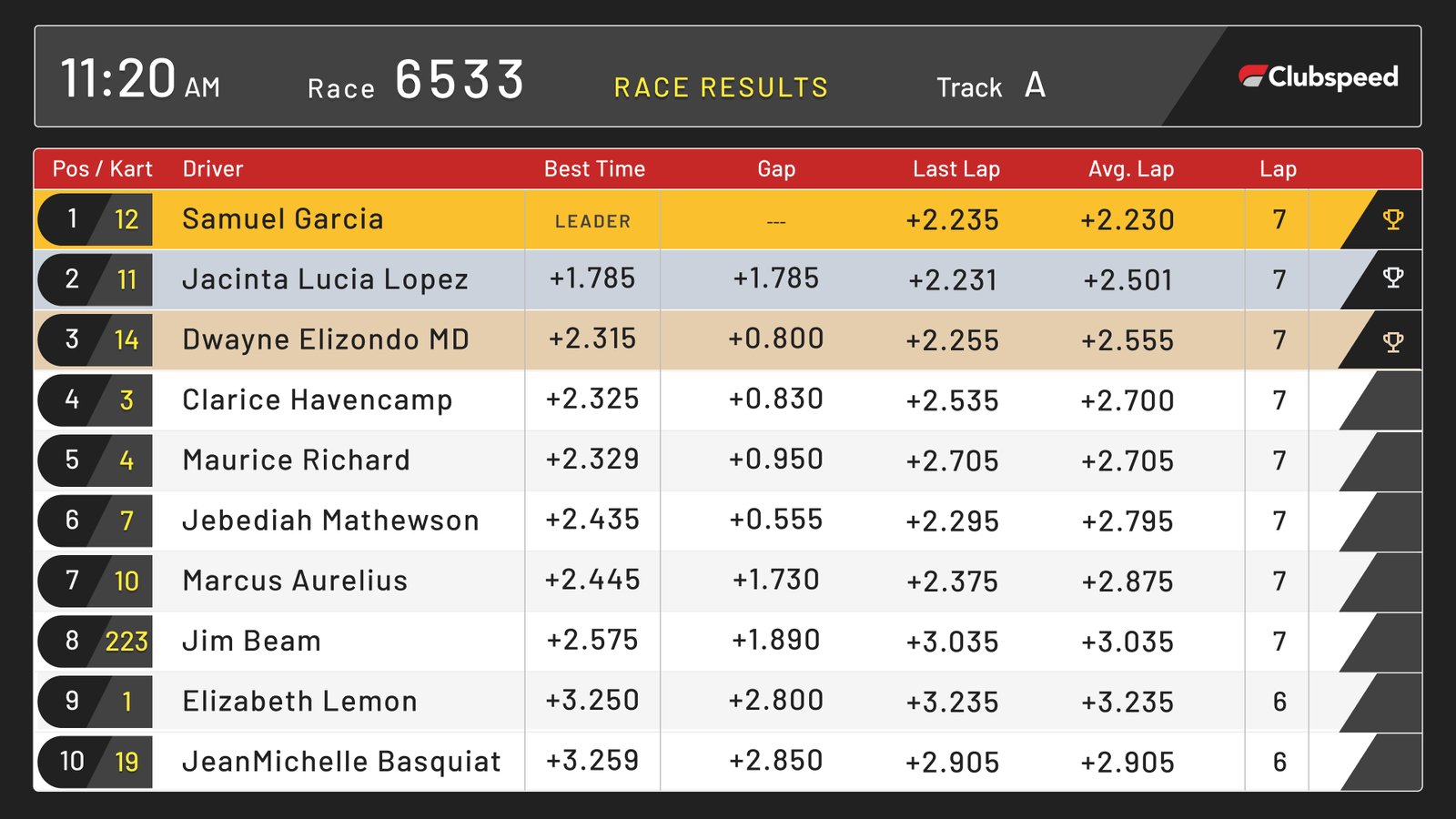
The starting line
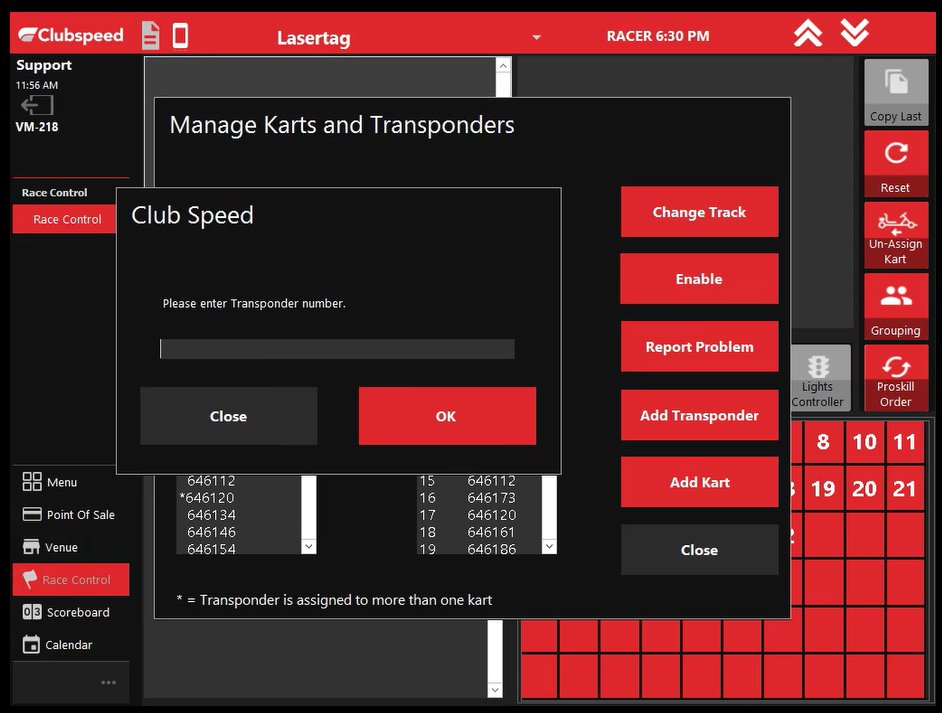
Clubspeed serves family entertainment centers: karting venues, laser tag arenas, and trampoline parks. Its core race-management product had grown organically for sixteen years into a sprawling feature set, with tools originally built for one context being stretched to cover entirely different ones.
The mandate was a full redesign of race operations with a non-negotiable deadline: a working demo at IAAPA 2024, the industry's largest trade show.
Research: venues, competitors, operators
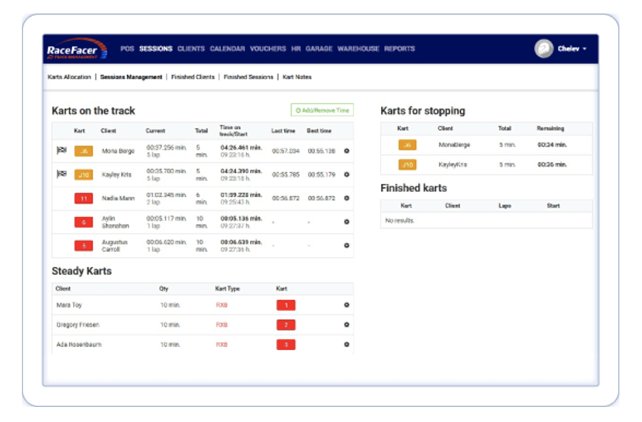
We grounded the redesign in two streams of research. Competitive analysis mapped how rival platforms organized race operations, and interviews with several large venue operators surfaced a critical insight: the track-side reality is an iPad in an operator's hands, not a desktop in a back office. That finding made the iPad viewport our primary design target.
AI-assisted exploration
Working in collaboration with the Director of Product, I used Google Stitch to rapidly generate early structural explorations, then carried promising directions into Figma through an AI-to-Figma workflow. This compressed weeks of blank-canvas ideation into days, which was essential with the trade show clock running.
The hard problem: one platform, every venue size
Karting venues vary enormously. A small track with limited throughput has fundamentally different operational needs than a high-volume mega-venue. Our first instinct of progressive disclosure that scaled the UI to the venue backfired: the interface accumulated an excessive layer of display controls just to manage its own complexity.
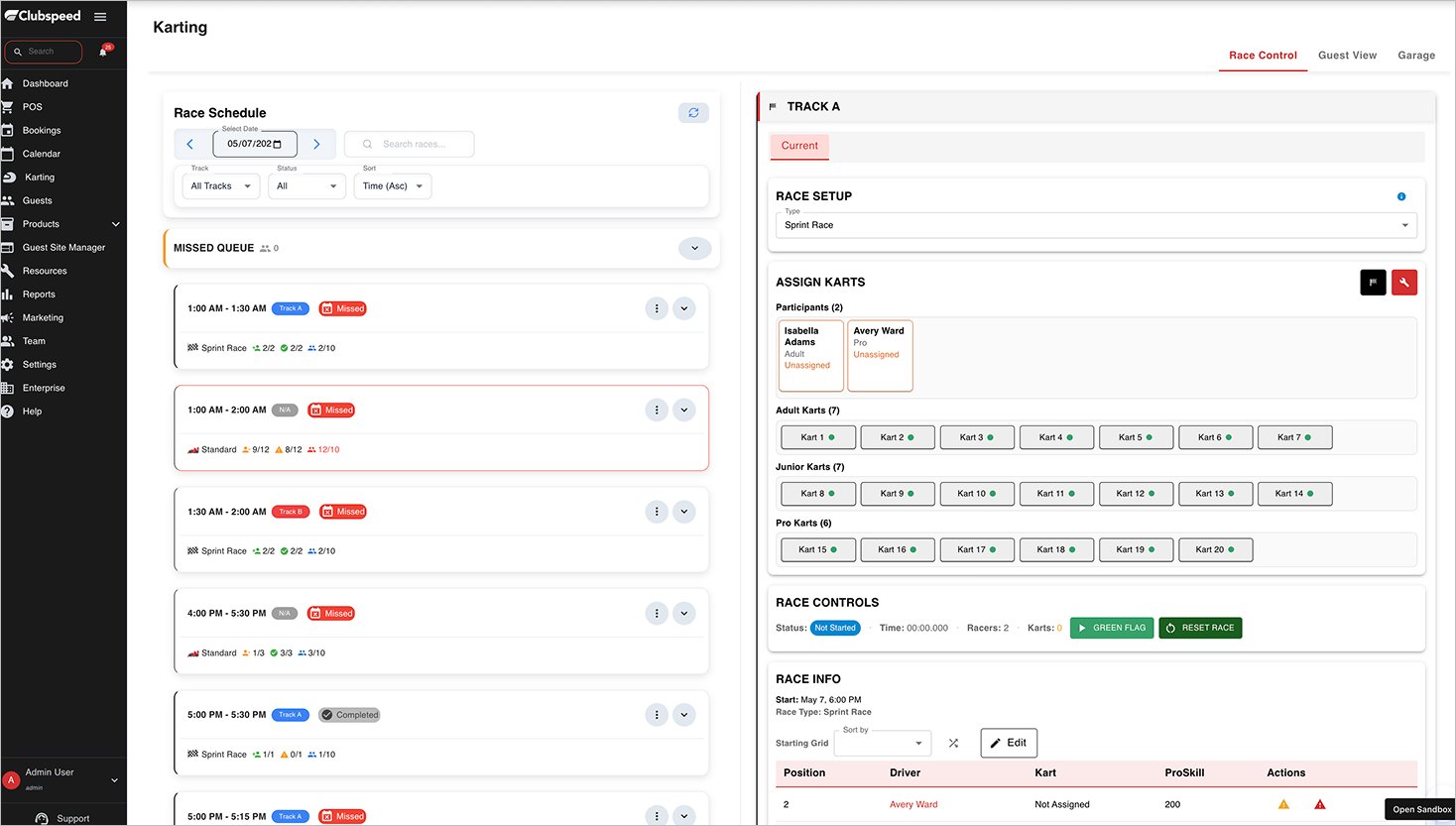
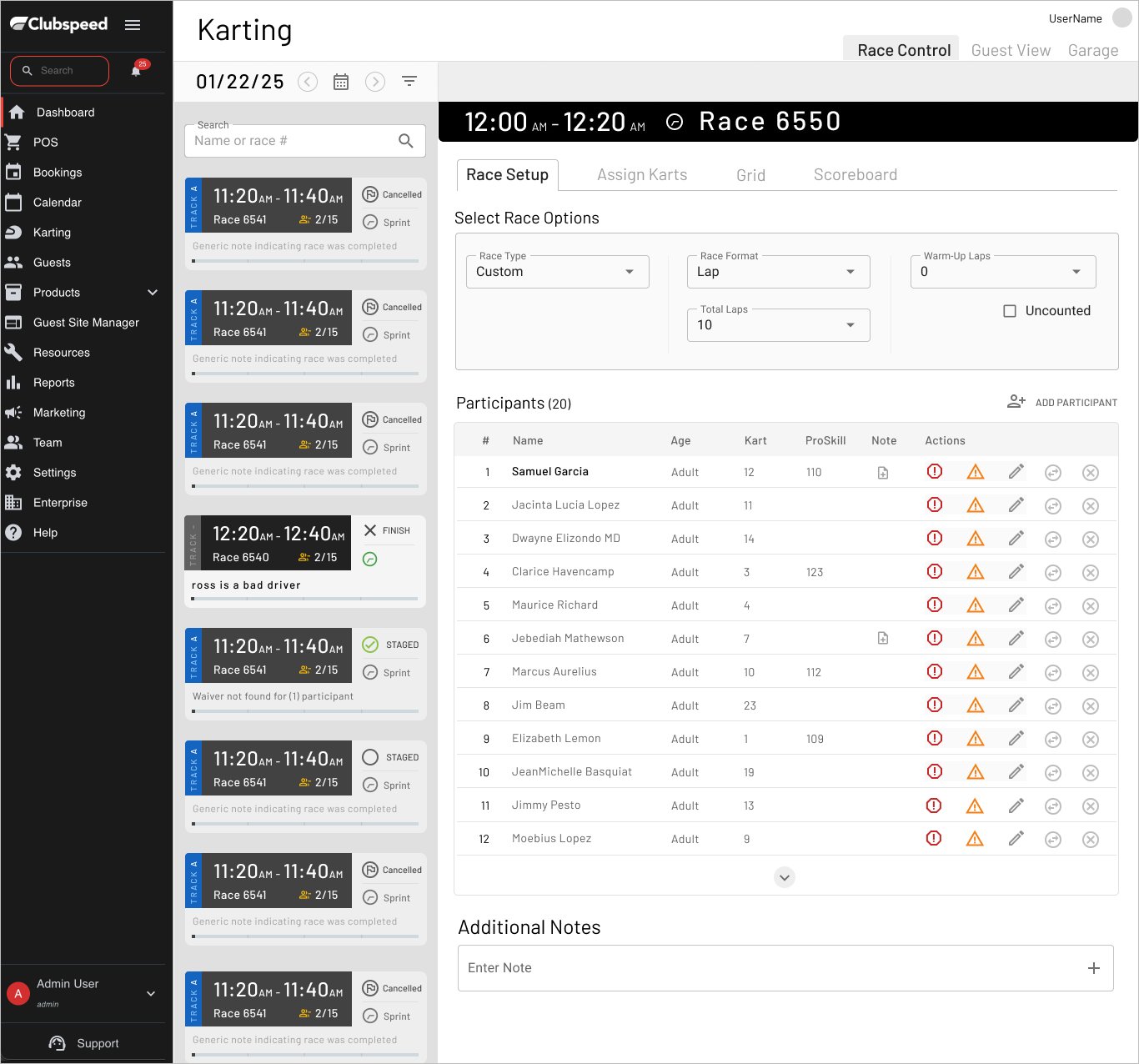
With the deadline forcing a decision, we cut the knot differently: two distinct tiers. RacingOS Lite for smaller operations and RacingOS Pro for high-volume venues, each with an interface honest about what its operators actually need on race day.
Outcome
RESULT
The RacingOS beta shipped on time and was demoed at IAAPA 2024, generating real momentum and excitement for Clubspeed's modernization story. The Pro version is currently in development, and RacingOS now lives as a module within Resova, the sister brand that will eventually encapsulate all Clubspeed offerings.
The lasting lesson: when scalability-through-disclosure starts generating its own complexity, segmenting the product can be the more honest design answer, especially when a deadline forces you to choose what each user truly needs.